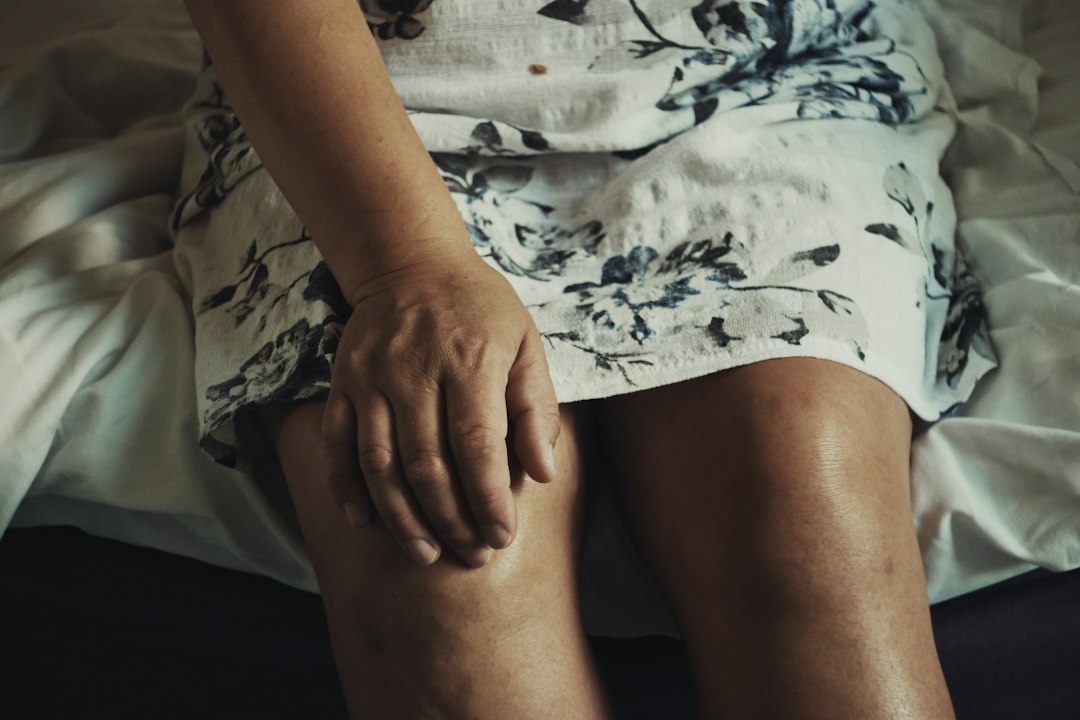
Why Your Knee Keeps Buckling: Understanding Joint Instability and Cartilage Loss
Knee giving way joint instability causes stem from a breakdown in the structures that stabilize your leg, particularly ligaments and cartilage that work together to keep your knee functioning smoothly. When these components deteriorate or sustain injury, your knee loses its ability to support your weight reliably, creating that unsettling sensation of your leg collapsing beneath you.
This isn't just an annoyance—it's a warning sign that something inside your knee needs attention.
The connection between instability and cartilage damage is direct and concerning. Each time your knee buckles, you risk compressing cartilage unevenly, accelerating wear. Over time, this creates a vicious cycle: instability causes improper movement patterns, which damages more cartilage, which worsens instability further.
- Knee buckling occurs when ligaments, muscles, or cartilage fail to provide adequate joint support
- Cartilage loss accelerates with repeated episodes of instability due to abnormal joint loading
- The condition can develop from acute injuries or gradual degenerative processes
- Early intervention slows progression and prevents permanent structural damage
- Specific exercises and lifestyle adjustments can restore stability before cartilage loss becomes severe
TL;DR: Knee instability happens when supporting structures weaken, allowing your knee to give way unexpectedly. This repeated buckling damages cartilage unevenly, triggering a destructive cycle. Identifying the cause early—whether ligament damage, muscle weakness, or cartilage wear—and addressing it prevents permanent joint degradation.
---The Science Behind Knee Instability: What Research Shows About Joint Structure and Function
How Your Knee Stabilizes Itself
Your knee is a complex hinge joint held stable by four primary ligaments that act like guy-wires on a tent. These ligaments—the ACL, PCL, MCL, and LCL—prevent excessive forward, backward, and sideways movement. Surrounding muscles provide dynamic stability, constantly micro-adjusting to keep your knee aligned as you move.
Cartilage acts as a shock absorber and frictionless surface inside the joint. When all components function properly, forces distribute evenly across the knee. But when ligaments stretch, muscles weaken, or cartilage degenerates, this balance breaks down, and your knee loses its ability to stabilize.
The Cartilage Deterioration Cycle
A 2022 study published in Osteoarthritis and Cartilage found that patients with ligamentous laxity experienced cartilage loss at twice the rate of those with stable knees. The reason is biomechanical stress concentration.
When ligaments fail to control joint movement, cartilage bears unequal pressure, causing localized wear patterns that accelerate degeneration over months and years.
Unstable knees also trigger chronic inflammation, releasing enzymes that actively break down cartilage matrix. This is why addressing instability early prevents irreversible damage. Once significant cartilage loss occurs, even perfect stability can't regenerate what's been lost.
The inflammatory response activates synovial fluid degradation, reducing joint lubrication and worsening friction. Over time, this creates a downward spiral: instability → inflammation → cartilage erosion → greater instability.
---Immediate and Long-Term Steps to Restore Knee Stability
What to Do Right Now
The first priority is protecting your knee from further damage while you rebuild stability. Stop activities that trigger buckling—high-impact sports, jumping, or prolonged standing without support. This doesn't mean complete rest; it means smart rest.
Apply ice for 15 minutes after any swelling or discomfort. Wear a supportive knee brace during daily activities to prevent unexpected giving way. The brace acts as an external ligament, compensating while your internal structures heal.
Begin isometric quad exercises immediately. These are gentle, static contractions that build muscle strength without moving the joint:
- Quadriceps sets: tighten thigh muscles while lying down, hold 5 seconds, repeat 10 times, 3 times daily
- Glute bridges: activate hip extensors that stabilize the knee, 15 reps, 2 sets daily
- Wall sits: hold a 45-degree squat against a wall for 20-30 seconds, rest, repeat 5 times
Building Long-Term Stability
Once acute symptoms settle, progressive strengthening is essential for lasting recovery. Your goal is restoring proprioception—your body's awareness of where your knee is in space—and muscular endurance.
Follow this progression over 8-12 weeks:
- Weeks 1-3: Perform isometric exercises daily, add gentle range-of-motion movements like slow leg lifts
- Weeks 4-6: Introduce resistance training with bands or light weights, focus on controlled motion with perfect form
- Weeks 7-9: Progress to single-leg balance exercises and lateral movements that challenge stability dynamically
- Weeks 10-12: Gradually return to functional activities like walking on varied terrain or light hiking
Balance work is often overlooked but critically important. Single-leg stance challenges proprioceptive nerves in your knee and ankle, enhancing awareness. Start by holding a wall or counter and standing on one leg for 30 seconds, 5 times daily.
Flexibility matters too—tight calf and hamstring muscles alter knee mechanics. Stretch after every strengthening session, holding stretches for 30 seconds. This prevents muscle imbalances that pull your knee out of alignment.
Supplements like Joint Genesis are formulated specifically around the nutrients most linked to cartilage support and inflammatory modulation. If you're committed to rebuilding your knee, combining targeted exercise with nutritional support addresses both the mechanical and chemical aspects of joint health.
---Warning Signs That Your Knee Instability Needs Professional Attention
Red Flags for Progressive Cartilage Loss
Certain symptoms indicate that cartilage damage has advanced beyond simple instability. Sharp, catching pain that comes and goes suggests pieces of damaged cartilage are moving inside your joint. Swelling that lingers for hours after activity signals inflammatory cartilage erosion.
Notice whether your knee gives way with less provocation than before. If what used to happen only during sports now happens on stairs or flat ground, cartilage loss is likely worsening. Creaking or grinding sounds during movement—crepitus—often indicate rough, worn cartilage surfaces.
Track these patterns over weeks:
- Swelling that appears within 30 minutes of activity and lasts 4+ hours
- Instability episodes occurring during normal daily activities, not just exercise
- Stiffness that takes 20+ minutes to improve after resting
- Pain that's worse in the morning, indicating overnight inflammation
- Warmth or redness around the knee joint
When to Seek Medical Evaluation
Schedule an appointment with your doctor or orthopedist if buckling episodes occur more than once weekly or if self-directed treatment shows no improvement after 4 weeks. MRI imaging can detect early cartilage loss before it becomes visible on X-rays, allowing earlier intervention.
Seek urgent care if your knee suddenly becomes unable to bear weight at all, swells dramatically within hours, or you hear a loud pop followed by immediate instability. These suggest acute ligament tears or severe cartilage displacement requiring immediate imaging and specialist evaluation.
A physical therapy evaluation is wise even before seeing a doctor. Licensed therapists can identify which structures are failing—ligaments, muscles, or cartilage—and design a targeted rehab program. Early professional guidance prevents months of ineffective self-treatment.
---Frequently Asked Questions About Knee Giving Way and Joint Stability
What causes a knee to suddenly give out without any prior injury?
Sudden buckling without trauma usually stems from muscular instability or cartilage deterioration. Your quadriceps and hip muscles gradually weaken from sedentary habits or aging, reducing the dynamic stabilization your knee needs. Additionally, cartilage can thin progressively over years, eventually reaching a point where it can no longer support normal weight distribution. Hormonal changes, particularly declining estrogen after menopause, accelerate cartilage breakdown. Your doctor should rule out acute tears with imaging, but gradual-onset instability is typically a strength and proprioception issue requiring exercise and lifestyle modification to reverse.
Can cartilage loss be reversed once knee instability causes damage?
Cartilage cannot regenerate on its own because it lacks blood vessels that deliver healing nutrients. Damage is essentially permanent once it occurs. However, progression can be halted and sometimes slowed significantly. By restoring knee stability through strengthening, you reduce abnormal loading that accelerates further wear. Anti-inflammatory nutrition and appropriate activity modification prevent inflammatory enzymes from attacking remaining cartilage. Research from the Journal of Rheumatology showed that aggressive early intervention in unstable knees halted cartilage loss progression in 65% of patients. The key is preventing additional damage, not reversing what's already lost.
How long does it take to rebuild knee stability through exercise?
Noticeable improvement typically appears within 3-4 weeks of consistent exercise, though full restoration takes longer. Your nervous system responds quickly to training, improving proprioception and muscle coordination within days. Structural ligament healing requires 6-12 weeks. Significant strength gains develop over 8-12 weeks of progressive resistance training. However, returning to high-impact activities safely often requires 3-6 months of consistent work. The timeline varies based on initial severity, your age, and exercise adherence. Patience is critical—rushing back to activities before stability fully returns risks re-injury and accelerating cartilage damage.
Does wearing a knee brace prevent further cartilage loss from instability?
A supportive knee brace provides immediate protection by stabilizing your joint during daily activities, reducing abnormal loading patterns that damage cartilage. Braces are most effective as a temporary support during the early healing phase, not a permanent solution. According to research in Sports Medicine, properly fitted braces reduce buckling episodes by 70-80% while you're strengthening your muscles. However, relying on a brace long-term can lead to muscle atrophy because your own stabilizing muscles don't get challenged. The brace buys time for your exercise program to work. Remove it gradually as strength improves, continuing exercises even after it's no longer needed to maintain stability and prevent recurrence.
---Knee instability doesn't have to become permanent joint damage. The window for preventing cartilage loss closes as degeneration advances, which is why early action matters. If your knee has been giving way or feeling unstable, addressing both the mechanical problem (strengthening and stability work) and the nutritional support your cartilage needs gives you the best chance of recovery.
Explore what Joint Genesis offers in terms of targeted joint support, and combine it with the exercise protocols outlined here for a comprehensive approach to rebuilding knee stability before significant cartilage loss occurs.